

If you sit in almost any corporate executive meeting, the discussion almost immediately turns to the “P&L“ – meaning the profit and loss of the business, as shown in the Income Statement. Executives manage to the P&L because it measures operational performance of a business or department over a specific period (a month, quarter, or year).
The Income Statement
The Income Statement or P&L shows the total revenue generated from sales and the costs associated with those sales, ending with Net Income.
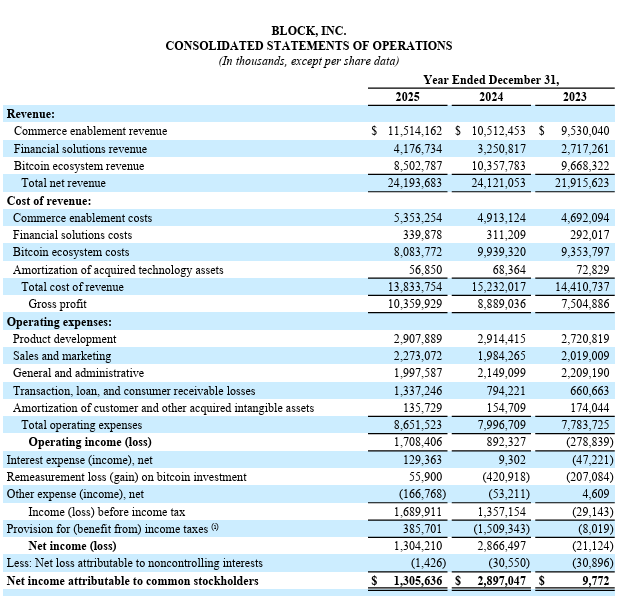
Revenue is the total money a business makes from selling products or services. Revenue must be earned from providing a product or service to a customer and does not include cash received from “non-operating” activities like cash from a loan or cash from selling shares.
Cost of Good Sold (COGS) is the total direct costs to create a product or deliver a service. COGS includes the cost of raw materials, direct labor used to physically build or create a product, and production overhead like the cost to maintain a factory. COGS will typically scale directly with the number of units that the business manufactures. Gross Profit is the total Revenue, less the total COGS.
Operating Expenses (Opex) represent administrative overhead and selling, general, and admin (SG&A) costs. These costs typically do not scale directly with the number of units that the business produces. Opex includes costs such as sales & marketing for advertising and sales commissions, administrative costs like office rent and legal/accounting services, and indirect salaries for central corporate functions such as corporate executives and HR. Operating Income or Earnings Before Interest & Taxes (EBIT) is the Gross Profit, less the total Opex.
Interest & tax expenses include interest accrued on any outstanding loans and can also include interest collected from investing in financial instruments like government bonds. Taxes refer to the income taxes that the company is required to pay based on its headquarters - in some cases, businesses with a wide international presence will pay income taxes in multiple countries. Net Income is Operating Income or EBIT, less the total interest & tax expenses.
Net Income will be the key link between the Income Statement, the Balance sheet (through Retained Earnings in the equity section), and the Cash Flow Statement (trough Cash Flow from Operations).
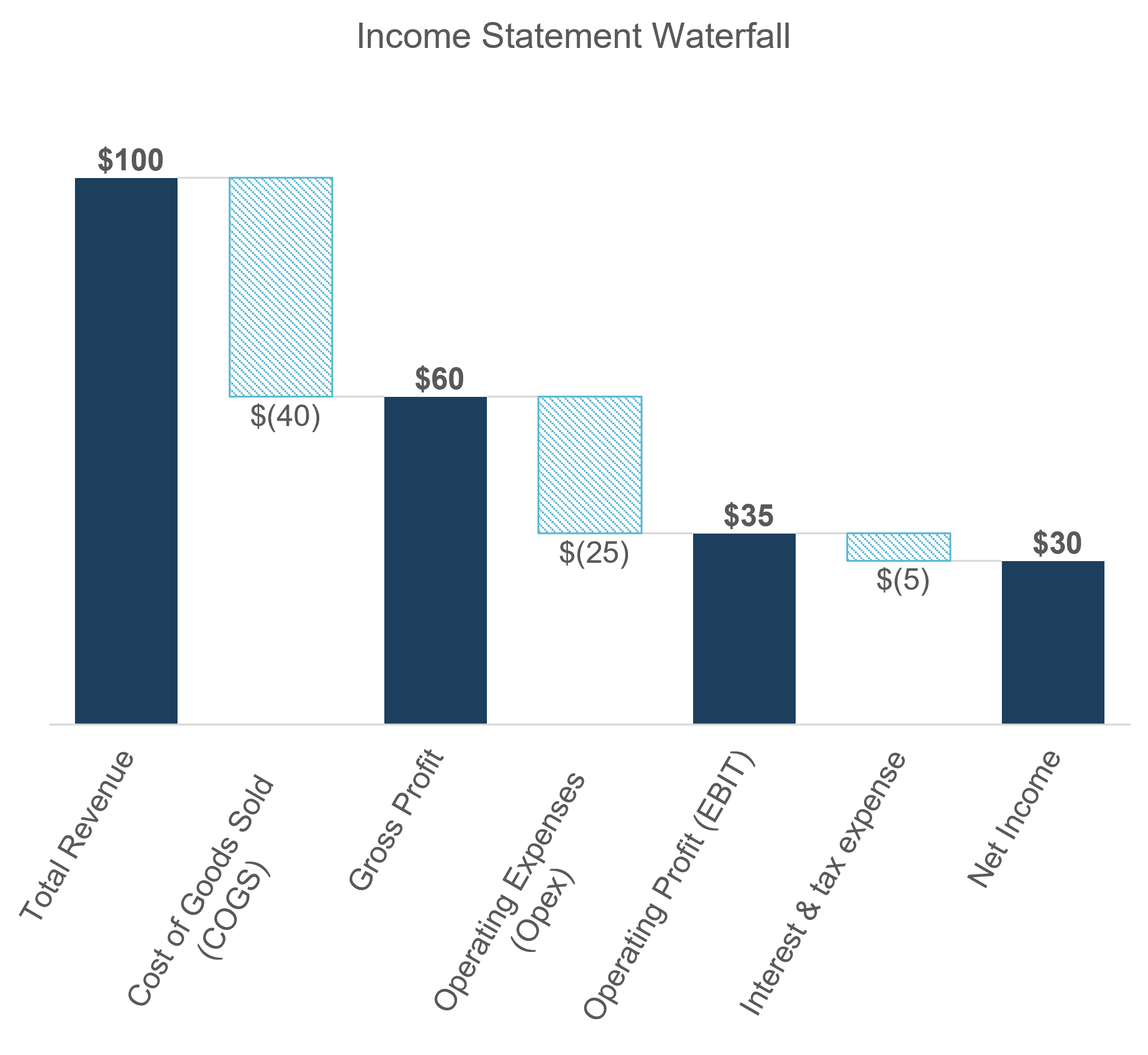
The Income Statement or P&L shows the classic top-to-bottom waterfall:
Revenue – Cost of Goods Sold (COGS) = Gross Profit
→ Gross Profit – Operating Expenses (Opex) = Operating income or Earnings Before Interest and Taxes (EBIT)
→EBIT – Interest & Taxes = Net Income
The Danger of P&L Tunnel Vision
The biggest trap for non-finance executives is managing the P&L in a vacuum. A company can show booming revenue and healthy Net Income while sprinting straight toward insolvency.
Why? Because the Income Statement is built on Accrual Accounting, not Cash Accounting.
Cash Accounting: Recognizes revenue when cash is deposited into the bank, and expenses when cash leaves the account. Most smaller businesses rely primarily on cash accounting due to its simplicity.
Accrual Accounting (GAAP Standard): Recognizes revenue when performance obligations are satisfied (when the money is actually earned),and matches expenses to the period in which they helped generate that revenue, regardless of when cash is actually deposited. Accrual accounting is required for publicly traded companies, per the Generally Accepted Accounting Principles (GAAP), and reports a clearer picture of the company’s finances.
If you focus solely on P&L metrics like Gross Margin or EBIT (or EBITDA), you miss how revenue recognition impacts the Balance Sheet and Cash Flow Statement.
Impact of cash versus accrual accounting example
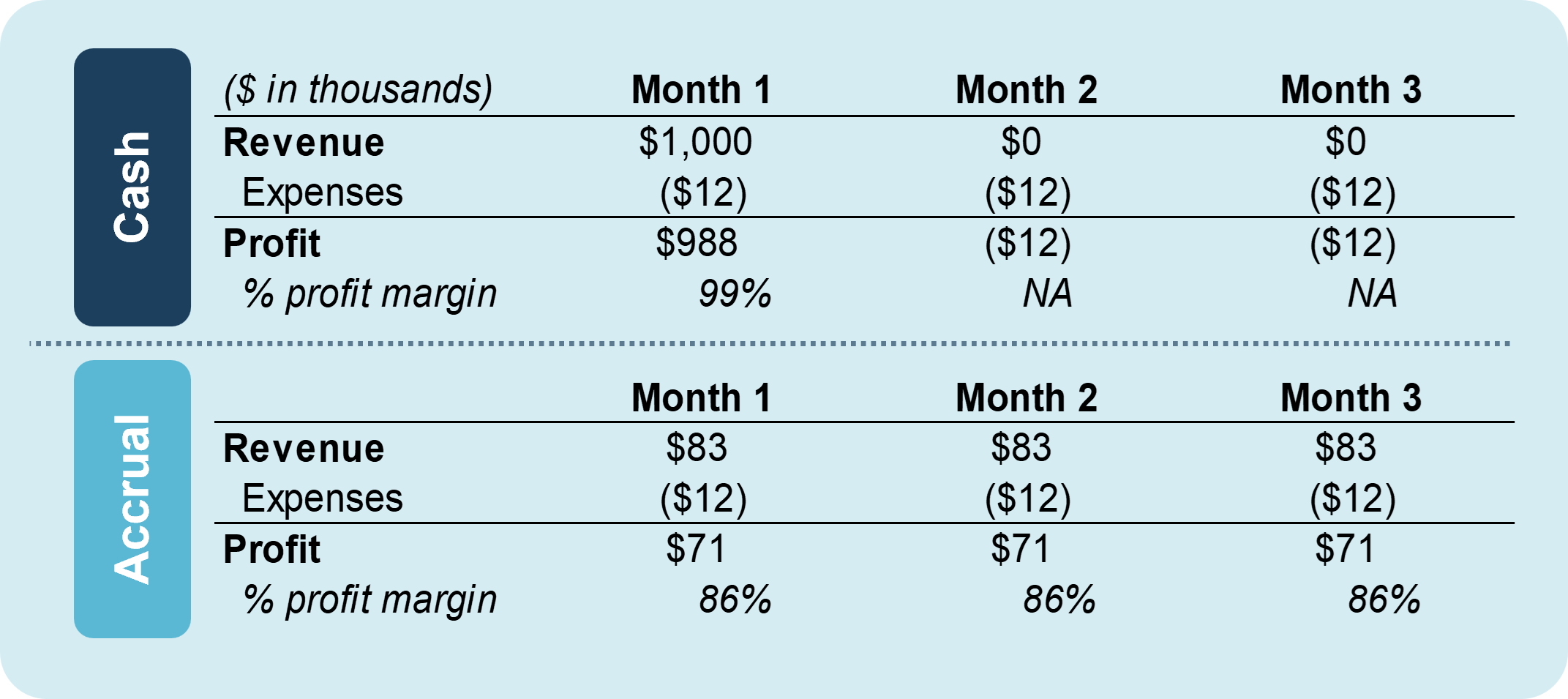
Let’s say you’re running a software business and your sales team lands a major $1 million deal with a client for a 12 month subscription.
Cash accounting:
Customer pays the $1 million up front and your revenue and profitability for month 1 look awesome.
But next month, you will still need to pay for the engineers, server hosts, and other suppliers, and you won’t have any revenue to offset those costs.
Accrual accounting:
Customer pays the $1 million up front, which gets reported on the Balance Sheet (more on this later).
Revenue is recognized as the service is provided, breaking up the $1 million payment over 12 months (and reducing the value on the balance sheet).
Expenses are reported monthly with the associated revenue and the profitability is more consistent and accurate.
The Executive Real-World Takeaway
During my time in corporate finance and later running a company as CEO, I repeatedly saw how payment terms, inventory lags, and capital commitments can dictate the survival of a business. Don’t judge the health of a company by its top-line growth or Net Income alone. Always ask: "How much actual cash did it cost to generate that profit?"
Net Income is an accounting convention—it is not cash in the bank. As an executive or financial analyst, your job isn’t just to manage the P&L; it’s to understand how every dollar on the Income Statement flows into working capital and cash generation to sustain the business.
© Katherine Dextraze, F Avenue Consulting, 2026