

If you had told me a decade ago that the focal point for commercial spaceflight would shift from Cape Canaveral to coastal Louisiana marshland, I would have assumed you had spent too much time in the heat.
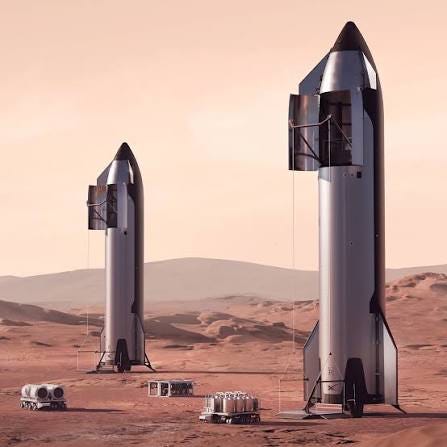
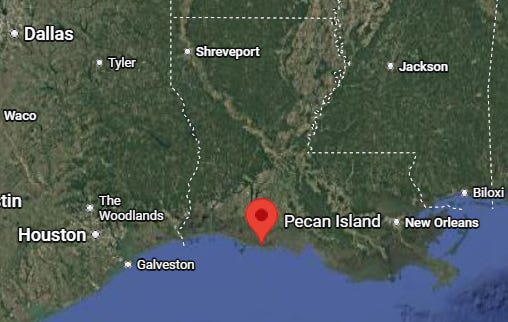
SpaceX has officially announced plans to build Starbase, Louisiana, a massive $100 billion spaceport complex situated on 125,000 acres in Vermilion Parish at Pecan Island. The site sits on former Exxon property that returned to commerce following recent coastal litigation settlements. Geographically, the location sits in a sweet spot for orbital mechanics and logistics. It is roughly 200 miles east of NASA's Johnson Space Center in Houston, 800 miles west of Cape Canaveral in Florida, and about a ten-hour drive from the existing Starbase facility in Boca Chica, Texas. Construction is slated to begin in 2027, with the first orbital launches targeted for 2029 or 2030.
Hardware, Launch Cadence, and Spaceport Architecture
This new facility is engineered specifically for Starship, SpaceX’s next-generation, fully reusable heavy-lift rocket. While Falcon 9 will continue launching Starlink satellites from Vandenberg Space Force Base in California, Florida-based Starlink launches will transition over to Starship as the company ramps up its launch frequency.
At full buildout, Starbase, Louisiana will feature:
5 launch complexes, housing 2 launch pads each (10 pads total) along with dedicated propellant farms.
Self-sustaining industrial infrastructure, including on-site natural gas propellant production, power generation, vehicle processing halls, deep-water shipping access, an airport, and employee residential housing.
Building in the bayou also comes with unique site-prep realities. While engineers will need to clear the occasional sunbathing alligator off the access roads before a static fire test, those local gators will soon have front-row seats to the most powerful rocket launches in human history.
The site will serve primarily as a high-frequency hub for SpaceX’s own manifest. This includes deploying next-generation Starlink constellations, launching orbital AI compute data center satellites, and supporting NASA’s Artemis lunar program alongside eventual Mars transport missions.
Solving the Talent Equation in the Bayou
Relocating thousands of aerospace technicians to rural Louisiana might sound like a hiring challenge, but the local labor pool offers a distinct structural advantage.
Louisiana’s Gulf Coast is home to generations of skilled industrial workers in oil, gas, chemical processing, and marine logistics. The technical skills required to operate high-pressure gas systems, cryogenic piping, heavy structural welding, and deep-water offshore logistics map directly to rocket launch infrastructure.
As detailed by Louisiana Economic Development (LED), SpaceX’s Starbase will generate massive local economic benefit:
Create 3,000 direct jobs over the next decade with an average annual salary of $92,600 (192% above the Vermilion Parish average wage), with total headcount expected to reach up to 10,000 direct positions and 8,100 indirect jobs.
Leverage LED FastStart, Louisiana’s customized state workforce training program, alongside regional university partnerships.
Support peak construction activity, which is estimated to employ over 30,000 workers.
Tax Incentives and State Backing: The “Louisiana Lightning Speed” Approach
Louisiana state officials rolled out an extensive incentive package to secure the project under Governor Jeff Landry’s “Louisiana Lightning Speed” initiative:
Local PILOT Agreement: SpaceX entered into a Payment in Lieu of Taxes (PILOT) structure with Vermilion Parish, paying $20 million upfront and $25 million annually over 25 years with an annual escalator, providing over $820 million in direct local funding.
State Rebates and Grants: The company will utilize the newly established Aerospace Facilities and Activities Rebate (Act 190 of 2026) and the High Impact Jobs program, while contributing $25 million to the Community Foundation of Acadiana.
Environmental Coordination: SpaceX is partnering with the Louisiana Department of Wildlife and Fisheries and the Coastal Protection and Restoration Authority to fund shoreline breakwaters and wetland restoration as part of the state’s Coastal Master Plan.
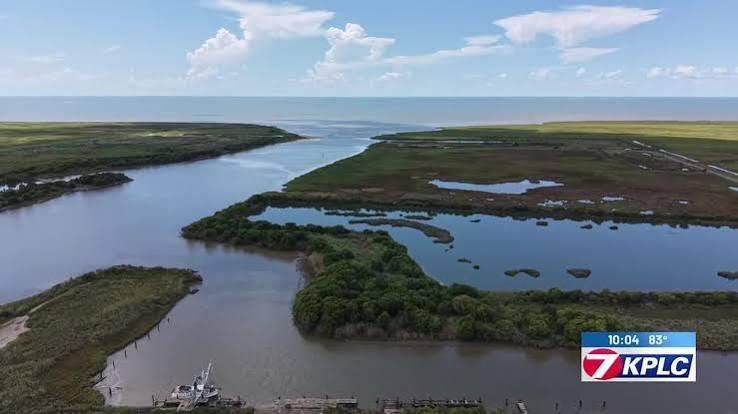
Pecan Island’s beautiful marshland. Image credit: KPLC.
The California Contrast: Why Louisiana Won the Site Selection
The move to Louisiana underscores growing regulatory friction in California.
The California Coastal Commission voted in 2024 against approving an Air Force proposal to expand SpaceX’s Falcon 9 launch schedule at Vandenberg Space Force Base from 35 to 50 launches per year. SpaceX filed a federal retaliation lawsuit alleging political bias. In April 2026, the commission settled the lawsuit, apologizing and acknowledging it cannot consider political speech or non-regulatory factors when reviewing launch schedules.
Louisiana presented a completely different regulatory climate. By offering abundant local natural gas feedstocks for methane fuel, streamlined state permitting, and open over-water flight paths across the Gulf of Mexico, the state created a much smoother path for high-cadence commercial launches.
Strategic Implications: FCC Satellite Licensing and Spacetech Ecosystems
For satellite constellation operators, launch availability is directly tied to regulatory compliance. The Federal Communications Commission (FCC) enforces strict deployment milestones for satellite licenses, requiring operators to launch specified percentages of their planned constellations within set timeframes to maintain spectrum rights. Securing a dedicated, high-capacity spaceport prevents launch pad bottlenecks from risking license forfeitures.
This massive infrastructure investment also creates significant “pick and shovel” opportunities across the broader space economy. Here are some companies to watch:
1. Public Pure-Play Equities (Traded Today)
Rocket Lab / Iridium (RKLB 0.00%↑ / IRDM 0.00%↑): The combined powerhouse pairs Rocket Lab’s agile launch infrastructure (Electron and upcoming Neutron rockets) with Iridium’s global LEO satellite communications network[1][2]. While SpaceX dominates super-heavy lift, Rocket Lab/Iridium controls small-to-medium payload insertions, direct-to-device connectivity, and satellite bus manufacturing.
AST SpaceMobile (ASTS 0.00%↑ ): Building a space-based cellular broadband network designed to connect directly to standard smartphones. Because their bluebird satellites feature massive phased-array antennas, AST SpaceMobile relies directly on heavy-lift commercial rockets (including SpaceX) to get their heavy constellation hardware into orbit.
Redwire Corporation (RDW 0.00%↑ ): A textbook “pick-and-shovel” space hardware supplier. Redwire manufactures critical sub-components across the industry, including ultra-thin solar arrays, space-grade avionics, robotic arms, and 3D printing modules for commercial satellites and space stations.
Intuitive Machines (LUNR 0.00%↑): A key lunar payload and services provider backing NASA’s Artemis program. They design autonomous lunar landers, orbital data relays, and surface infrastructure, serving as a prime commercial play on lunar exploration.
2. Late-Stage / Pre-IPO Candidates to Watch
Sierra Space: The developer behind the reusable Dream Chaser spaceplane and inflatable commercial space station modules (partnering on Orbital Reef). As a well-funded late-stage venture, Sierra Space sits at the top of most aerospace IPO watchlists as commercial low-Earth-orbit operations expand.
Stoke Space: Developing fully reusable rockets engineered for rapid turnarounds. With major Series E funding rounds behind them, Stoke Space represents the next generation of private launch providers to track as they approach full commercial deployment.
Vast: Focused on building artificial-gravity commercial space stations (starting with Haven-1). They are positioned to lead the post-ISS transition for commercial research and orbital manufacturing.
3. Large-Cap Aerospace & Defense Prime Contractors
L3Harris Technologies (LHX 0.00%↑ ): Provides advanced satellite payloads, space domain awareness sensors, and rocket propulsion systems through its Aerojet Rocketdyne division.
Honeywell International (HON 0.00%↑ ): A core supplier of satellite guidance, navigation, control systems, and thermal management hardware across civil and defense space programs.